


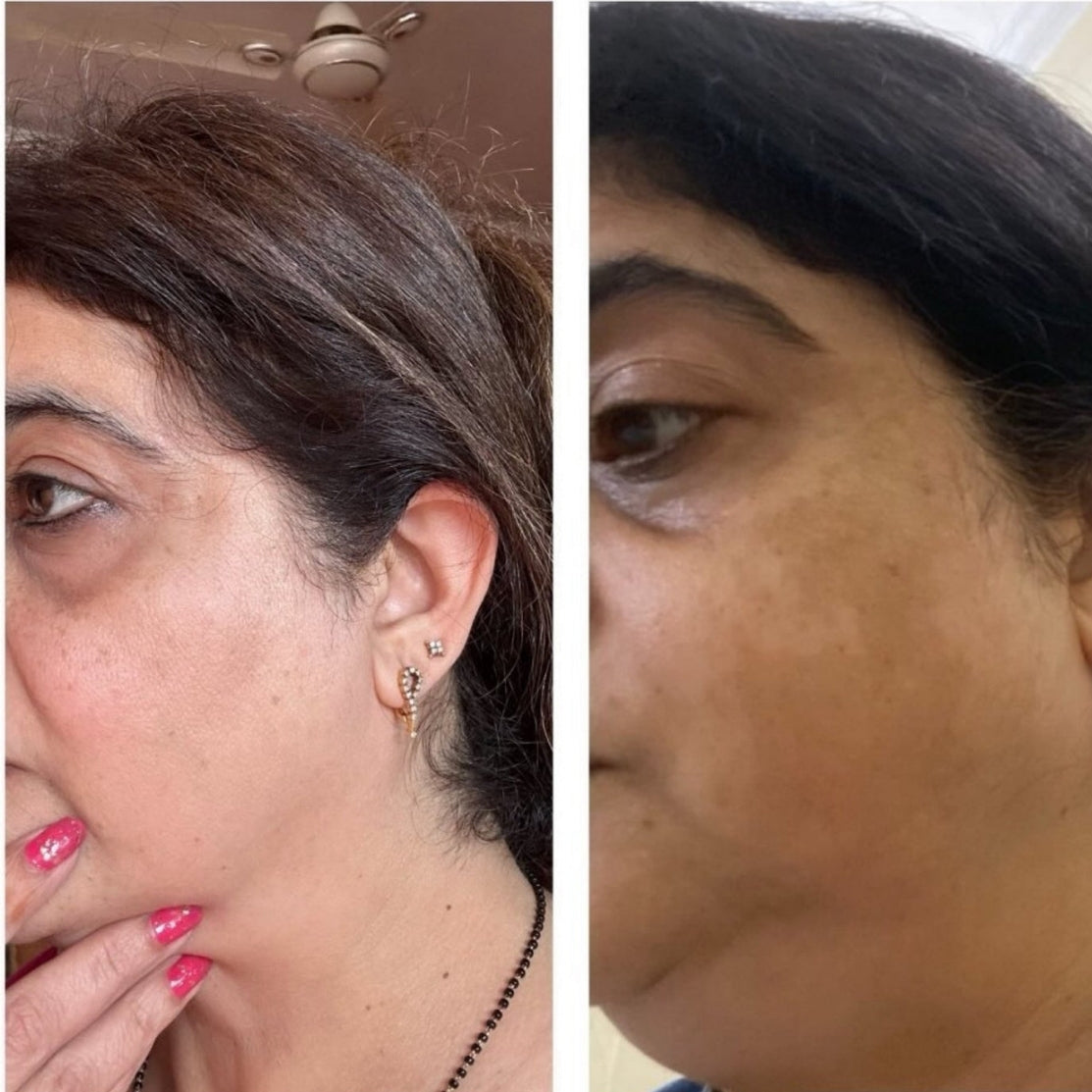
Milia are small, white or yellowish bumps that commonly appear on the face and are often mistaken for acne.
Unlike pimples, milia are not caused by clogged pores or bacteria. They form when keratin becomes trapped beneath the skin’s surface, creating firm, pearl-like cysts that do not respond to typical acne treatments.
Because milia behave differently from breakouts, effective milia treatment focuses on gentle exfoliation, skin renewal, and prevention rather than aggressive extraction.
When addressed correctly, milia can be reduced safely without damaging the skin barrier.
What Are Milia and Why Do They Appear?
Milia are keratin-filled cysts that sit just below the outer layer of the skin.
Keratin is a natural protein found in skin, hair, and nails, but when it becomes trapped instead of shedding normally, milia can form.
Milia on face areas such as the cheeks, under-eyes, forehead, and nose are common. They can also appear as milia on lips, particularly around the lip line, where the skin is thinner and more sensitive.
Common causes include:
-
Dead skin buildup due to slow cell turnover
-
Heavy or occlusive skincare products
-
Sun damage that thickens the outer skin layer
-
Skin trauma, burns, or irritation
-
Improper exfoliation
Because milia are not inflamed, squeezing or picking them often leads to irritation rather than removal.
How Milia Are Different From Acne
Understanding the difference between milia and acne is essential for choosing the right milia removal approach.
Acne forms inside pores and is often associated with oil, bacteria, and inflammation. Milia, on the other hand, sit outside the pore structure and are not linked to oil production.
This is why drying acne treatments usually make milia worse rather than better.
Effective milia treatment works by encouraging controlled exfoliation and improving skin renewal, not by stripping oil or over-cleansing.
Safe Remedies to Get Rid of Milia
The safest way to address milia is through gradual skin correction rather than forceful removal. Below are remedies commonly recommended for how to get rid of milia on face safely.
1. Gentle Chemical Exfoliation
Milia often form when dead skin cells fail to shed properly. Mild exfoliating acids help loosen this buildup and encourage normal skin turnover.
Ingredients commonly used include:
-
Lactic acid
-
Mandelic acid
-
Low-strength salicylic acid
These ingredients work slowly and are generally better tolerated than harsh scrubs.
2. Avoiding Heavy and Occlusive Products
Rich creams and thick oils can trap keratin under the skin, especially around the eyes and lips. Switching to lighter formulations can reduce the likelihood of new milia forming.
This is particularly important for people experiencing milia on lips, where heavy balms and occlusive products are often overused.
3. Controlled Retinoid Use
Retinoids support cell turnover and are commonly recommended for persistent milia. However, they must be introduced carefully to avoid irritation, especially in delicate facial areas.
Retinoids should be:
-
Used at low strength
-
Applied gradually
-
Avoided directly under the eyes unless specifically formulated
Aggressive retinoid use can damage the skin barrier and worsen milia in the long run.
4. Professional Extraction (When Necessary)
In cases where milia are deep or persistent, professional extraction may be recommended.
Only trained professionals using sterile techniques should perform this.
DIY extraction is not considered a safe milia removal method and often leads to redness, scarring, or infection.
Milia Around Sensitive Areas
Milia around the eyes and lips require special care because the skin in these areas is thinner and more prone to irritation.
When milia appear near the eyes, treatments that rely on harsh exfoliation or pressure are usually avoided. Instead, barrier-friendly exfoliation and targeted serums are preferred.
Skin in these areas often reacts to imbalance rather than buildup alone.
Facial tension and repeated movement patterns can also affect how skin sheds and renews itself, which is why holistic routines often address multiple zones together rather than isolating one concern.
How Consistent Skincare Supports Milia Treatment
Consistency matters more than intensity when dealing with milia. Over-treating the skin can slow healing and trigger further buildup.
Effective how to get rid of milia strategies focus on:
-
Gentle cleansing
-
Regular but mild exfoliation
-
Barrier repair
-
Avoiding unnecessary irritation
Skin that renews itself efficiently is less likely to trap keratin beneath the surface.
Best Targeted Serum for Milia Treatment
House of Beauty Milia Serum
Targeted formulations can support milia treatment by improving skin turnover without overwhelming the skin.
The House of Beauty Milia Serum is designed to:
-
Support gentle exfoliation
-
Improve skin renewal
-
Reduce keratin buildup over time
Unlike harsh treatments, this serum is intended for consistent use rather than rapid correction. It can be applied to areas prone to milia while maintaining overall skin comfort.
What to Avoid When Treating Milia
Certain habits commonly worsen milia or slow improvement.
Avoid:
-
Scrubs with rough particles
-
Picking or squeezing
-
Over-layering active ingredients
-
Applying heavy creams to congested areas
Milia responds better to patience than pressure.
How Long Does Milia Treatment Take?
Milia do not disappear overnight. Because they involve trapped keratin rather than inflammation, visible improvement usually occurs gradually.
Most people notice:
-
Smoother texture within a few weeks
-
Fewer new milia forming
-
Gradual flattening of existing bumps
The timeline depends on skin type, consistency, and the extent to which irritation is avoided.
How to Prevent Milia Recurrence
Prevention plays a major role in long-term success.
Helpful habits include:
-
Regular exfoliation suited to skin type
-
Avoiding heavy products in milia-prone areas
-
Supporting skin renewal with targeted treatments
-
Maintaining a balanced skincare routine
Once the skin’s shedding process improves, milia become less frequent.
Frequently Asked Questions
1. Can milia go away on their own without treatment?
In some cases, milia can resolve on their own as the skin naturally renews itself. However, this process is often slow, especially in adults where cell turnover is reduced.
2. Is it safe to remove milia at home?
No, home extraction is not safe for milia. Because milia sit beneath the surface of the skin, attempting to squeeze or pierce them can lead to irritation, infection, or scarring.
Conclusion
Safe and effective milia treatment focuses on supporting the skin’s natural renewal process rather than forcing removal.
When addressed gently, milia can be reduced without compromising the skin barrier.
Understanding how to get rid of milia on face involves patience, consistency, and choosing treatments that respect the skin’s structure.
With the right approach and targeted support, milia can be managed effectively while keeping the skin healthy and balanced.