


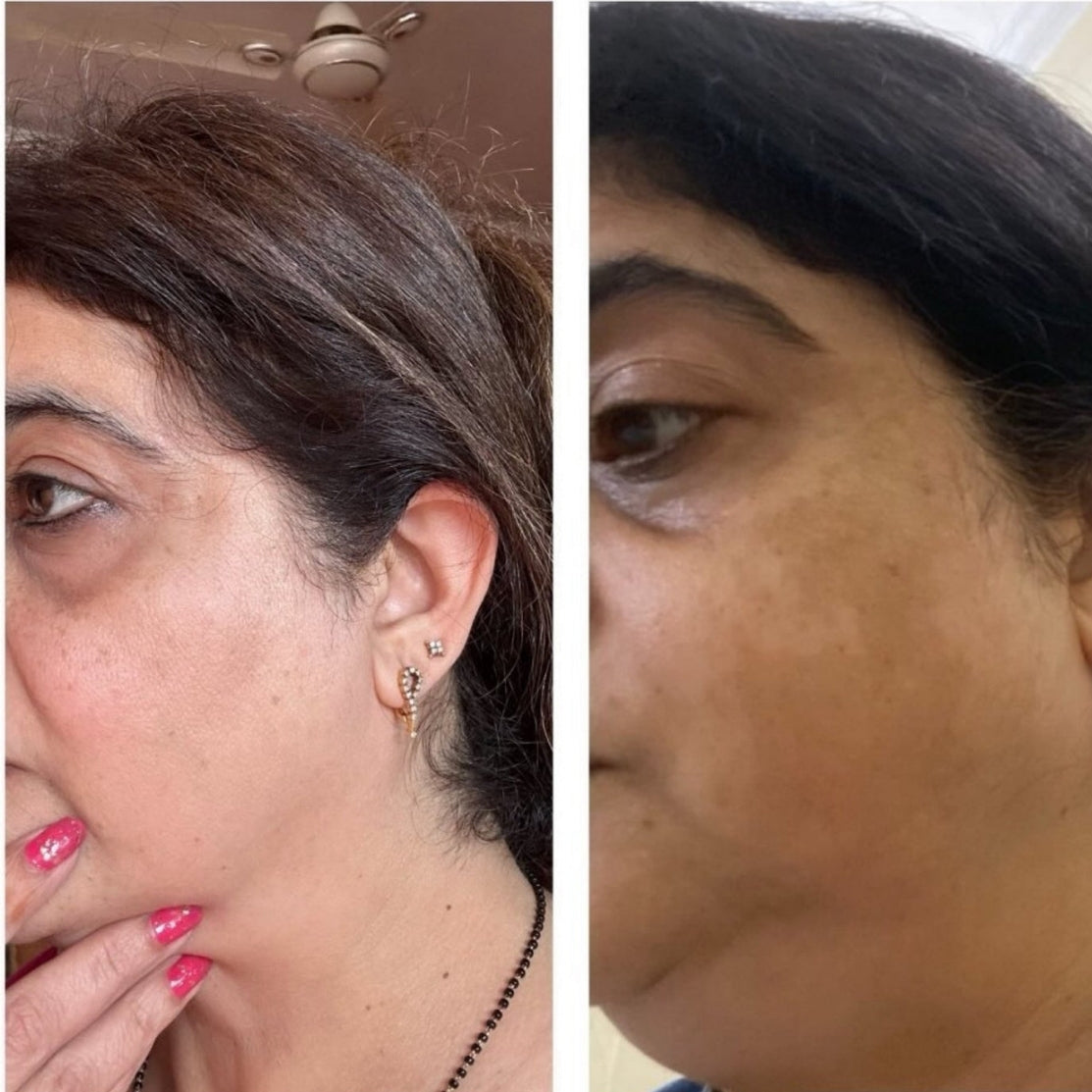



Jowls refer to the sagging or drooping skin that appears along the jawline, usually extending from the corners of the mouth toward the chin.
They develop gradually and are influenced by factors such as aging, gravity, muscle weakening, posture, lifestyle habits, and changes in skin elasticity.
While jowls are a natural part of facial aging, many people look for non-invasive ways to manage their appearance and support jawline definition.
Facial muscles play a significant role in how the lower face holds its shape. When these muscles lose tone or remain underused, the skin they support may begin to sag.
This is where face yoga for jowls becomes relevant. Facial yoga focuses on strengthening, activating, and relaxing specific facial muscles while improving circulation and awareness.
Over time, consistent practice may help support muscle tone, reduce tension, and promote a more balanced facial appearance.
Why Face Yoga for Jowls Can Be Helpful
Face yoga for jowls works by engaging the muscles around the jaw, cheeks, neck, and lower face.
These areas are often affected by poor posture, stress-related clenching, and reduced muscle activity.
Facial exercises for jowls aim to improve muscle engagement and circulation, which can support skin health and facial structure.
While face yoga does not promise instant changes, regular practice may help those looking to understand how to fix jowls naturally and how to prevent jowls from becoming more pronounced over time.
Results vary depending on age, consistency, lifestyle, and individual facial structure, which is why patience and regular practice are essential.
7 Easy Face Yoga for Jowls Moves

Below are seven easy face yoga moves that focus on the jawline and lower face.
1. Jawline Lift Exercise
This exercise focuses on activating the muscles along the jaw and chin.
-
To practice, sit upright and tilt your head slightly upward.
-
Gently push the lower jaw forward and hold the position for a few seconds before relaxing.
-
Repeat this movement eight to ten times.
This is one of the commonly practiced jowl exercises to support muscle engagement along the jawline.
2. Chin Resistance Exercise
Resistance-based movements help activate deeper facial muscles.
-
Place your fist under the chin and gently open the mouth while applying light resistance with the hand.
-
Hold briefly, then relax.
-
Repeat this exercise six to eight times.
This movement supports facial exercises for jowls by strengthening muscles beneath the chin.
3. Cheek and Jaw Activator
Cheek muscles directly influence the appearance of jowls.
-
Smile gently without showing teeth and lift the cheeks upward while placing fingertips lightly on them.
-
Hold for a few seconds and release.
-
Repeat eight to ten times.
This face yoga for jowls move helps support muscle balance between the cheeks and jaw.
4. Neck Stretch and Release
The neck plays a key role in lower face support and should not be ignored.
-
Slowly tilt the head to one side, feeling a gentle stretch along the neck and jaw area.
-
Hold for a few seconds and switch sides.
-
Repeat five times on each side.
This exercise supports circulation and relaxation in areas connected to jowl formation.
5. Lip Pull Exercise
This movement activates muscles around the mouth and jaw.
-
Pull the lower lip over the upper lip, creating a gentle stretch.
-
Hold for a few seconds, then relax.
-
Repeat eight to ten times.
This exercise is often included in routines addressing how to get rid of jowls naturally.
6. Jaw Massage and Relaxation
Tension in the jaw can contribute to facial imbalance.
-
Using fingertips, gently massage the jawline in upward circular motions for about one minute.
-
Focus on areas that feel tight.
Relaxation-based jowl exercises help release tension while supporting lymphatic flow.
7. Full Lower Face Activation
This exercise combines breathing with gentle muscle engagement.
-
Inhale deeply through the nose, lightly tap along the jawline and lower face with fingertips, and exhale slowly.
-
Continue for one to two minutes.
This movement supports circulation and is often used at the end of facial routines.
Best Place to get Guided Face Yoga for Jowls
Face Yoga by House of Beauty
While jowl exercises can be practiced independently at home, some individuals prefer structured guidance to ensure correct technique and consistency.
Face Yoga by House of Beauty follows a holistic facial wellness approach that combines guided face yoga sessions with facial massage techniques and non-invasive face rituals such as acupressure and face tapping.
Along with hands-on sessions, personalized consultations are offered to assess facial structure, lifestyle habits, and skin concerns, helping create tailored routines.
The brand also provides professional training and certification programs focused on facial anatomy and technique, making facial yoga for jowls a more mindful and sustainable practice over time.
Jowl Exercises Before and After: What to Expect
When people search for jowl exercises before and after results, it is important to understand that facial yoga works gradually.
Changes, if any, appear over weeks or months of consistent practice rather than days. Improved muscle awareness, reduced tension, and better posture often appear before visible changes in the jawline.
How Often Should Jowl Exercises Be Practiced?
Facial exercises for jowls are generally practiced for five to ten minutes daily. Consistency, gentle movements, and proper breathing matter more than intensity. Overworking facial muscles should be avoided.
Conclusion
Jowls are a natural part of facial aging influenced by multiple internal and external factors. Face yoga for jowls offers a non-invasive approach that focuses on muscle engagement, relaxation, and circulation.
While it is not a replacement for medical or cosmetic procedures, regular practice can support facial balance and help those exploring how to prevent jowls or how to fix jowls naturally over time.
When combined with mindful posture, hydration, stress management, and overall wellness, jowl exercises can become a supportive part of a long-term facial care routine.